Tired of Chaotic Team Meetings? This Simple Tool Brought Clarity to My Workday
You know that feeling when everyone’s talking, ideas are flying, but nothing sticks? I used to leave meetings exhausted, with no clear next steps. Then I found online whiteboards—no more scattered notes or forgotten tasks. It’s like having a shared brain for my team. We finally collaborate in real time, see progress instantly, and actually enjoy working together. If your workday feels messy, this might be the small change that makes everything click. It didn’t fix everything overnight, but it gave us something we’d been missing: clarity, connection, and a little more joy in our day.
The Messy Reality of Modern Work
Let’s be honest—how many times have you walked out of a meeting and thought, ‘Wait, what are we actually doing?’ I’ve been there more times than I can count. My team would spend an hour brainstorming, voices overlapping, energy high, only to end with a vague sense of direction and zero written follow-up. Ideas would spark and then disappear. Tasks were assigned in passing, with no real ownership. I’d leave feeling drained, not energized, and honestly a little frustrated. It wasn’t that we weren’t trying. We cared about our work. But without a clear way to capture and track our thoughts, we kept spinning our wheels.
What made it worse was the follow-up chaos. Emails would fly back and forth, each person remembering a different version of what was decided. Someone would claim they weren’t assigned anything, while another insisted they were overloaded. We weren’t lazy or disorganized by nature—we just lacked a central place to see everything at once. Our tools were fragmented: notes in one app, tasks in another, files stored somewhere else. It felt like trying to solve a puzzle with pieces scattered across five rooms. No wonder we kept repeating the same conversations every week. The problem wasn’t us—it was the system we were using, or rather, not using.
I started to dread team planning sessions. They took up so much time but rarely led to real progress. I’d spend the rest of the day playing catch-up, trying to piece together what had been said, who was doing what, and what deadlines were approaching. It wasn’t just inefficient—it was emotionally exhausting. And I know I’m not alone. So many women I talk to, especially those balancing work and family, feel this pressure to be ‘on’ all the time, to keep everything moving. But how can we stay ahead when our work tools are holding us back? That’s when I realized: maybe the issue wasn’t my team’s effort or focus. Maybe we just needed a better way to work—together.
Discovering the Power of a Shared Visual Space
Everything shifted when a colleague introduced me to an online whiteboard. At first, I thought, ‘Another tech tool? Really?’ I’d been burned before by apps that promised the world but delivered confusion. But this was different. It wasn’t about flashy features or complicated dashboards. It was about giving our ideas a home. We moved our next team meeting to the whiteboard, and from the first click, it felt more natural. Instead of one person typing notes while others talked, we all jumped in—adding sticky notes, drawing connections, moving things around in real time. It was like watching our thoughts come alive.
What surprised me most was how quickly it reduced misunderstandings. Before, if I said ‘Let’s revisit the client timeline,’ someone might interpret that as a suggestion, while another thought it was a task. Now, we write it on the board, tag the person responsible, and set a due date—right there, in full view. No more guessing. No more passive-aggressive email chains. The board became our single source of truth. And because everyone could see it, everyone was accountable. Not in a stressful way, but in a ‘we’re all in this together’ kind of way.
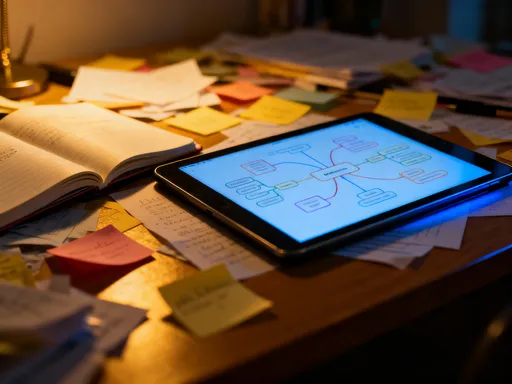
There’s something powerful about visualizing your work. When ideas are just spoken, they’re fleeting. But when you see them on a screen—grouped, color-coded, connected—they feel real. They have weight. We started using simple shapes: circles for big ideas, rectangles for tasks, arrows to show flow. It wasn’t fancy, but it worked. We could zoom out and see the whole project, or zoom in to focus on one piece. That ability to shift perspective changed how we thought. We weren’t just reacting—we were planning, anticipating, creating. And honestly? It made work feel less like a chore and more like a shared mission. For the first time in a long time, I looked forward to our team meetings.
How Online Whiteboards Fit Seamlessly into Daily Routines
One of my biggest fears was that this new tool would add another layer to an already busy day. I didn’t need more steps—I needed fewer. But the beauty of the online whiteboard is that it simplifies, not complicates. I started with something small: a daily stand-up board. Just three columns—‘Today,’ ‘Blocked,’ and ‘Done.’ Each morning, my team spends five minutes updating their cards. It takes less time than a coffee run, but it sets the tone for the whole day.
The first few days, it felt a little awkward. Some team members weren’t used to sharing their progress so openly. But soon, it became second nature. We’d tag each other when we needed help, add quick comments, or move a task to ‘Done’ with a little sense of pride. I loved seeing the ‘Done’ column grow throughout the day. It was a visual reminder that we were moving forward, even on tough days. And for remote team members, it was a game-changer. They no longer felt out of the loop. They could log in from anywhere, see what was happening, and contribute in real time. It created a sense of presence, even when we weren’t in the same room.
What I didn’t expect was how comforting it felt to have one place to check. Before, I’d open five different apps just to get a sense of where things stood. Now, I start my day by opening the board. It’s like checking the weather—except instead of rain or sun, I see progress, bottlenecks, and priorities. It’s not just efficient; it’s calming. I’m not scrambling to remember what’s due or who’s waiting on me. Everything is right there. And when my kids ask for help with homework or dinner needs to go in the oven, I can step away without that nagging worry in the back of my mind. I know I can come back and pick up right where I left off.
Turning Chaos into Clear Action Plans
We used to have these big, exciting brainstorming sessions—full of energy and ideas—but walk away with nothing concrete. It was like having a feast and leaving hungry. We’d talk about launching a new campaign, improving client onboarding, or streamlining our reports, but no one knew where to start. The ideas stayed in the air, never landing on paper—or in this case, the digital workspace.
The whiteboard changed that. Now, when we brainstorm, we do it directly on the board. Everyone adds their thoughts as sticky notes. Then, as a team, we group similar ideas, prioritize them by dragging them up or down, and break them into actionable steps. We use color codes: red for urgent, yellow for in progress, green for complete. Arrows show which tasks depend on others. It’s like building a roadmap in real time. What used to take days of back-and-forth emails now happens in a single 45-minute session. And because we do it together, everyone buys in. There’s no confusion about what comes first or who owns what.
I remember one project that had been stuck for weeks. We kept saying we’d ‘get to it,’ but no one took the lead. On the whiteboard, we laid out every piece—what we knew, what we didn’t, who could help. Within an hour, we had a clear plan with assigned owners and deadlines. Two weeks later, the project was complete. That never would’ve happened before. The visual structure gave us the clarity to act. It’s not that we became superhuman—it’s that the tool removed the mental clutter. We could focus on doing the work, not figuring out how to start it. And that made all the difference.
Strengthening Team Connection and Trust
This might sound surprising, but the whiteboard didn’t just improve our productivity—it improved our relationships. In our old meetings, the loudest voices often dominated. The quieter team members had great ideas, but they’d hesitate to speak up. Now, they can add their thoughts on the board at their own pace. They can use text, drawings, or even voice notes. It’s created a more inclusive space where everyone feels heard.
We’ve also started using little digital stickers to celebrate wins—confetti for a completed project, a star for a job well done. It sounds small, but it adds a touch of joy to our work. We laugh more now. We’ll joke about a messy part of the board or celebrate when someone moves a long-stalled task to ‘Done.’ These little moments build connection. We’re not just coworkers—we’re a team that cares about each other’s success.
Trust has grown because we can see each other’s contributions. There’s no more guessing who’s doing what. When someone is overloaded, it’s visible. When someone finishes early, they can jump in to help. It’s created a culture of support, not competition. I’ve noticed that people are more willing to ask for help and more eager to offer it. That shift didn’t happen because of a policy or a training—it happened because we could see each other’s work, and in seeing it, we began to understand and respect it. And that’s made our team stronger, kinder, and more resilient.
Practical Tips for Getting Started Without Overwhelm
If you’re thinking, ‘This sounds great, but I don’t have time to learn a new system,’ I get it. I felt the same way. The good news? You don’t have to overhaul everything at once. Start small. Pick one meeting—maybe your weekly team check-in or a project kickoff—and try using the whiteboard just for that. Invite your team, share your screen, and let them explore.
Don’t worry about making it perfect. Use a simple template if it helps, but let your team shape it over time. Encourage everyone to add their thoughts—type, draw, upload a quick image. The goal isn’t a polished board—it’s progress. I remember my first board was a little messy. Sticky notes everywhere, arrows going in all directions. But it worked. We captured what mattered, and that was enough.
Be patient. It might feel awkward at first, especially if your team isn’t used to working this way. That’s okay. Give it a few rounds. Celebrate the small wins—like when someone updates their task without being reminded, or when a meeting ends with clear next steps. Consistency matters more than complexity. Over time, you’ll find a rhythm that works for your team. And the best part? Most online whiteboards are free to start or have low-cost plans. No big investment, no IT setup. Just a simple tool that grows with you.
A Smarter, Calmer Workday Is Within Reach
Looking back, I realize the online whiteboard didn’t just change how we work—it changed how we feel about work. My days are less frantic. I’m not constantly playing catch-up or worried I’ve missed something important. I have more mental space to think, to breathe, to be present—both at work and at home. When I’m helping my daughter with her science project or planning dinner with my partner, I’m not distracted by work chaos. I know where things stand, and that peace of mind is priceless.
It’s not magic. It’s not a secret formula. It’s simply about giving your team a shared space to think, plan, and grow together. When you can see your work, you can manage it. When you can manage it, you can improve it. And when you improve it, you start to enjoy it again. That’s the real win—not just fewer missed deadlines, but more joy, more connection, more confidence in what you’re doing.
If your work feels scattered, if your meetings leave you more confused than clear, I encourage you to try an online whiteboard. Start small. Be patient. Invite your team in. You might be surprised by how such a simple tool can bring so much clarity. Because sometimes, the biggest changes come from the smallest shifts. And when your work feels lighter, more organized, and more human, you’re not just a better employee—you’re a more present mom, partner, and friend. And that, to me, is what really matters.