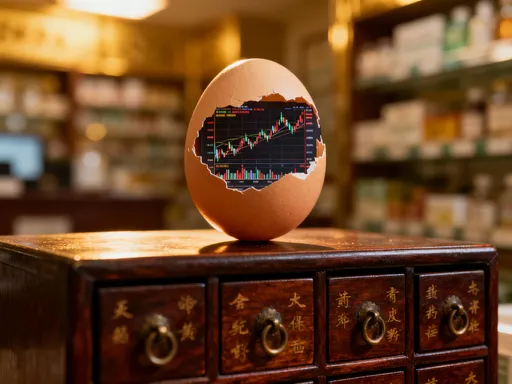
Why Putting All Your Eggs in Traditional Chinese Medicine Investments Can Backfire
I once thought investing in traditional Chinese medicine (TCM) was a golden ticket—cultural heritage, growing demand, what could go wrong? But I learned the hard way that even promising sectors can become traps without smart diversification. The truth is, putting too much faith—and money—into one niche, no matter how meaningful, exposes you to hidden risks most investors ignore. While TCM carries deep historical significance and has seen renewed global interest, treating it as a guaranteed investment can lead to serious financial consequences. This is not to dismiss its value, but to highlight the importance of balancing emotional attachment with financial discipline. In today’s complex markets, even culturally rooted industries are subject to volatility, regulatory shifts, and supply chain vulnerabilities. Investors who overlook these realities may find themselves overexposed and underprepared when conditions change. The goal is not to avoid TCM altogether, but to approach it with eyes wide open—recognizing its potential while safeguarding against concentration risk.
The Allure of Traditional Chinese Medicine in Modern Portfolios
Traditional Chinese medicine has experienced a resurgence in global attention over the past two decades, drawing interest not only from practitioners of holistic health but also from investors seeking long-term, culturally anchored opportunities. At its core, TCM encompasses a broad system of practices including herbal remedies, acupuncture, dietary therapy, and mind-body disciplines such as tai chi and qigong. Its integration into wellness routines across Asia, North America, and parts of Europe has fueled demand for related products and services. This growing appeal is supported by increasing consumer preference for natural and preventive healthcare solutions, especially among aging populations and those managing chronic conditions. As a result, many view TCM as more than a cultural artifact—it is seen as a viable and stable component of modern health infrastructure.
One of the primary reasons investors are drawn to TCM is the perception of enduring demand. Unlike trends that rise and fall with market sentiment, TCM has demonstrated resilience across centuries, adapting to changing medical landscapes while maintaining a loyal user base. In countries like China, government policies have actively promoted TCM through funding research, establishing dedicated hospitals, and integrating it into national health systems. This institutional support enhances the sector’s credibility and suggests long-term viability. Additionally, the expansion of e-commerce platforms has made TCM products more accessible globally, enabling companies to scale operations beyond regional borders. From premium herbal teas to standardized extracts and wellness retreats, the commercial applications are broad and increasingly professionalized.
Another factor contributing to TCM’s financial appeal is the rising popularity of wellness tourism. Travelers are increasingly seeking destinations that offer authentic healing experiences, including herbal consultations, detox programs, and meditation retreats rooted in traditional practices. This trend has spurred investment in specialized resorts, clinics, and training centers, particularly in regions with strong TCM traditions. These ventures often combine lifestyle appeal with medical credibility, creating hybrid business models that attract both health-conscious consumers and impact-focused investors. Furthermore, partnerships between TCM institutions and international healthcare providers have opened doors for cross-border collaboration, further legitimizing the sector within global markets.
Despite these positives, it is crucial to recognize that market enthusiasm does not equate to guaranteed returns. The very factors that make TCM attractive—its cultural depth, holistic promise, and growing visibility—can also lead investors to overestimate its stability and underestimate its complexities. While demand may be real, translating that demand into consistent, scalable profits requires navigating a host of operational and regulatory challenges. Investors must look beyond the narrative of tradition and examine the underlying economics: supply chain reliability, product standardization, intellectual property protection, and clinical validation. Without this scrutiny, the allure of TCM can become a trap disguised as opportunity.
Why Emotional Attachment Can Cloud Financial Judgment
For many investors, especially those with cultural ties to East Asia, traditional Chinese medicine is more than a financial opportunity—it is a personal connection to heritage, identity, and family wisdom. This emotional resonance can profoundly influence decision-making, often in ways that bypass rational analysis. When an investment aligns with deeply held beliefs or ancestral practices, it becomes easier to overlook red flags and harder to accept negative signals. This psychological bias, known as affect heuristic, leads individuals to judge decisions based on emotional responses rather than objective data. In the context of investing, this means that a favorable feeling toward TCM can distort perceptions of risk and return, resulting in disproportionate allocations.
Consider the case of an investor who grew up using herbal remedies prescribed by a family elder. The positive memories associated with those experiences create a sense of trust and familiarity that extends to modern TCM companies. This trust may lead the investor to assume that any business operating in the space is inherently sound, ethical, or resilient. Such assumptions are dangerous in financial markets, where sentiment cannot protect against poor management, regulatory crackdowns, or market saturation. Emotional attachment also increases the likelihood of confirmation bias—seeking out information that supports existing beliefs while dismissing contradictory evidence. An investor might celebrate a single successful clinical trial while ignoring broader concerns about inconsistent product quality or lack of regulatory oversight.
Historical parallels exist in other culturally significant industries. For instance, some investors have poured money into organic farming or artisanal food production because they align with personal values around sustainability and tradition. While these sectors can offer value, they are not immune to economic pressures, competition, or shifting consumer preferences. The same principle applies to TCM: cultural significance does not insulate it from market forces. When portfolios become heavily weighted toward emotionally meaningful assets, they lose flexibility and become vulnerable to sector-specific shocks. A policy change, a public health scare, or a supply disruption can trigger sharp declines that are difficult to recover from if diversification is lacking.
Moreover, emotional attachment often leads to delayed exits. Investors may hold onto underperforming TCM stocks longer than rational analysis would suggest, hoping for a turnaround that may never come. This behavior, known as the endowment effect, causes people to overvalue assets they already own simply because they possess them. It prevents timely rebalancing and can erode overall portfolio performance. Recognizing the role of emotion in investment decisions is the first step toward mitigating its impact. By separating personal values from financial strategy, investors can still support TCM—through thoughtful, limited exposure—without jeopardizing their long-term financial health.
The Hidden Volatility Behind Seemingly Stable Sectors
On the surface, traditional Chinese medicine appears to be a stable and enduring field, rooted in centuries of practice and widely accepted in many societies. However, beneath this perception of resilience lies a sector that is surprisingly vulnerable to external shocks and internal inconsistencies. One of the most significant sources of volatility is the reliance on natural raw materials—medicinal herbs and plants that are sensitive to climate, soil conditions, and harvesting practices. Unlike synthetic pharmaceuticals, which can be mass-produced under controlled environments, TCM ingredients are often cultivated in specific regions, making supply chains fragile and prone to disruption. Droughts, floods, or pest infestations can drastically reduce yields, leading to price spikes and inventory shortages that directly affect company profitability.
Another critical challenge is the lack of standardization across TCM products. While some manufacturers adhere to strict quality controls, others operate with minimal oversight, resulting in wide variations in potency, purity, and efficacy. This inconsistency undermines consumer confidence and increases regulatory scrutiny. In recent years, several countries have tightened import regulations on herbal products due to concerns about contamination, mislabeling, or the presence of undeclared pharmaceutical substances. These regulatory shifts can happen quickly and without warning, catching investors off guard. For example, a sudden ban on certain herbs in a major export market can wipe out a significant portion of a company’s revenue overnight, especially if it lacks diversified distribution channels.
Intellectual property presents another layer of risk. Many TCM formulas are based on ancient knowledge that is not protected by patents, making it difficult for companies to defend their market position. This opens the door to competition from low-cost producers who replicate popular remedies without investing in research or quality assurance. At the same time, efforts to patent modernized versions of traditional formulas often face legal and ethical debates, further complicating commercialization. Without clear IP protection, innovation in the sector may be stifled, and investors may struggle to identify companies with sustainable competitive advantages.
Additionally, the scientific validation of TCM remains uneven. While some treatments have been studied in clinical trials and shown promising results, many practices lack rigorous, large-scale evidence required by Western medical standards. This gap creates uncertainty for investors, particularly as healthcare systems increasingly demand proof of efficacy and cost-effectiveness. A shift in public health policy toward evidence-based medicine could marginalize certain TCM applications, reducing their market relevance. When compared to broader healthcare sectors—such as biotechnology or medical devices—TCM exhibits higher unpredictability in performance, with returns more closely tied to regulatory sentiment and consumer trends than to measurable clinical outcomes. Understanding these hidden vulnerabilities is essential for any investor considering significant exposure to the sector.
Diversification: Not Just a Buzzword, But a Buffer
Diversification is one of the most fundamental principles in sound investing, yet it is often overlooked when emotions or cultural affinities come into play. At its essence, diversification means spreading investments across different asset classes, industries, and geographies to reduce the impact of any single failure. In the context of traditional Chinese medicine, this principle is especially important because the sector, while meaningful, is inherently narrow and exposed to specific risks. A portfolio heavily concentrated in TCM stocks, herbal startups, or related real estate is vulnerable to sector-wide disruptions—be it a regulatory change, a supply chain breakdown, or a shift in consumer sentiment. By contrast, a well-diversified portfolio includes a mix of assets whose performances are not closely correlated, meaning that losses in one area can be offset by gains in another.
To illustrate, consider two hypothetical portfolios. The first is composed entirely of TCM-related investments: a few publicly traded herbal product companies, a private equity stake in a wellness retreat, and land used for cultivating medicinal herbs. The second includes a modest allocation to TCM—say, 10%—with the remainder distributed across biotechnology firms, pharmaceutical companies, medical device manufacturers, health infrastructure projects, and global healthcare ETFs. Now imagine a scenario where new regulations limit the export of certain herbs, causing TCM stock prices to drop by 30%. In the first portfolio, the entire value declines significantly, with few avenues for recovery. In the second, the overall impact is cushioned; while the TCM portion suffers, other holdings may remain stable or even rise due to increased demand for regulated medical alternatives.
Historical data supports the effectiveness of diversification in reducing portfolio volatility. Studies have shown that broadly diversified portfolios consistently exhibit lower drawdowns during market stress periods compared to concentrated ones. This does not mean that diversified portfolios always deliver higher returns—sometimes a focused bet pays off handsomely—but they do provide greater stability and predictability over time. For investors who value both growth and preservation of capital, this trade-off is often worth it. Diversification does not eliminate risk altogether, but it transforms unmanageable, concentrated risk into a series of smaller, more controllable exposures.
Moreover, diversification allows investors to participate in multiple facets of the healthcare ecosystem. While TCM focuses on holistic and preventive approaches, other sectors offer complementary opportunities—such as digital health platforms, telemedicine services, and advanced diagnostics. These areas benefit from technological innovation, scalable business models, and strong regulatory frameworks, providing a counterbalance to the more tradition-based TCM market. By integrating TCM into a broader health-centric strategy, investors can support cultural heritage while also positioning themselves for long-term financial resilience. The goal is not to abandon passion, but to channel it wisely within a disciplined framework.
Smart Allocation: Balancing Passion with Prudence
Loving traditional Chinese medicine does not require betting your financial future on it. In fact, the most sustainable way to support the sector is through strategic, limited allocation rather than overwhelming concentration. The key is to treat TCM as a satellite holding—a meaningful but secondary component of a larger, well-structured portfolio—rather than the foundation. This approach allows investors to honor their values while maintaining financial discipline. One effective method is to gain exposure through exchange-traded funds (ETFs) that focus on Asian health markets or broader alternative medicine sectors. These funds offer instant diversification, spreading risk across multiple companies and reducing dependence on any single player. They also provide liquidity and transparency, making it easier to adjust positions as market conditions evolve.
Another strategy is to pair TCM investments with more regulated and scientifically validated healthcare companies. For example, an investor might allocate a small portion of their portfolio to a TCM herbal products firm while also holding shares in a medical device manufacturer or a pharmaceutical company with a strong research pipeline. This combination balances innovation with stability, tradition with technology. It also creates a natural hedge: if regulatory scrutiny increases on herbal supplements, the investor’s exposure to evidence-based medical solutions can help offset potential losses. Similarly, investing in real estate investment trusts (REITs) linked to medical campuses or integrated health centers allows indirect participation in the wellness economy without direct ownership of TCM-specific ventures.
For those interested in private investments, due diligence becomes even more critical. Startups in the herbal or wellness space often promise high returns but carry elevated risks, including uncertain scalability, regulatory hurdles, and intense competition. Instead of committing large sums to a single venture, investors can consider joining syndicates or angel networks that pool resources and expertise. This collective approach improves access to information, enhances negotiation power, and spreads risk across multiple early-stage companies. It also provides opportunities to learn from experienced investors who understand the nuances of the health sector.
Ultimately, smart allocation is about intentionality. It requires asking hard questions: What percentage of my portfolio reflects emotional preference rather than financial logic? Am I overestimating the stability of this sector because of personal attachment? Can I afford to lose this investment without compromising my long-term goals? By confronting these questions, investors can make more informed decisions that align both with their values and their financial objectives. Passion has a place in investing—but it must be tempered with prudence.
Red Flags: When Enthusiasm Turns into Overexposure
Every investor should periodically assess their portfolio for signs of overconcentration, especially in sectors tied to personal passion. In the case of traditional Chinese medicine, certain warning signals indicate that enthusiasm may have crossed into financial risk. One major red flag is when a significant portion of the portfolio—whether in stocks, private investments, or physical assets—is tied to TCM-related ventures. If the performance of the overall portfolio becomes highly sensitive to developments in a single industry, it suggests a lack of diversification. For instance, if news about a regulatory change in herbal product labeling causes immediate anxiety about portfolio value, that is a sign of overexposure.
Another indicator is reliance on a narrow set of suppliers, regions, or companies. If an investor’s TCM holdings depend heavily on herbs sourced from one geographic area, or if returns are tied to the success of a single startup or clinic, the risk profile becomes increasingly fragile. Similarly, investing in unregulated or semi-regulated markets without proper legal or financial safeguards increases vulnerability to fraud, mismanagement, or sudden policy shifts. Investors should also be cautious when they find themselves defending underperforming assets based on cultural significance rather than financial metrics. Statements like “This company matters too much to sell” or “It’s part of our heritage” often signal emotional decision-making overriding sound judgment.
A third warning sign is the absence of clear exit strategies. Diversified investors typically have predefined criteria for rebalancing—such as selling a portion of gains to reinvest elsewhere or cutting losses after a certain threshold. Those overly attached to TCM may lack these mechanisms, holding onto losing positions indefinitely in hopes of a cultural or market revival. This behavior not only locks up capital but also prevents redeployment into more promising opportunities. Additionally, if conversations about investments consistently focus on TCM while neglecting other sectors, it may reflect a cognitive bias toward familiarity rather than opportunity.
Regular portfolio reviews, ideally conducted with a financial advisor, can help identify these patterns before they lead to significant losses. The goal is not to eliminate TCM exposure but to ensure it remains within a responsible, manageable range. By recognizing these red flags early, investors can take corrective action—rebalancing, diversifying, or adjusting allocations—before emotional attachment turns into financial regret.
Building a Resilient Health-Centric Investment Strategy
The journey of investing in traditional Chinese medicine ultimately reveals a deeper truth: honoring cultural heritage and achieving financial security are not mutually exclusive, but they require careful alignment. TCM holds undeniable value—not just as a medical system, but as a living tradition that continues to influence global wellness. Supporting its growth through investment can be a meaningful act, provided it is done with awareness and discipline. The key lies in integration rather than isolation. Rather than building a portfolio around TCM alone, investors can create a resilient health-centric strategy that includes TCM as one element among many. This broader approach encompasses preventive care, digital health innovation, medical infrastructure, and global access to treatment—all areas experiencing long-term growth driven by demographic and technological trends.
Such a strategy allows investors to contribute to the evolution of healthcare while protecting their financial well-being. It recognizes that the future of medicine is not a choice between tradition and modernity, but a synthesis of both. By combining the wisdom of ancient practices with the rigor of contemporary science, investors can support holistic solutions without sacrificing accountability or scalability. This balanced perspective fosters sustainability, ensuring that passion does not come at the cost of prudence. Moreover, it promotes long-term resilience, enabling portfolios to adapt to changing regulations, market conditions, and consumer behaviors.
In the end, the most successful investors are not those who chase trends or cling to nostalgia, but those who combine insight with restraint. They understand that true wealth preservation comes not from putting all their eggs in one culturally familiar basket, but from constructing a diversified, thoughtful portfolio that reflects both their values and their goals. Traditional Chinese medicine deserves a place in that portfolio—not as the centerpiece, but as a respected and measured component. In doing so, investors honor the past without risking their future.